
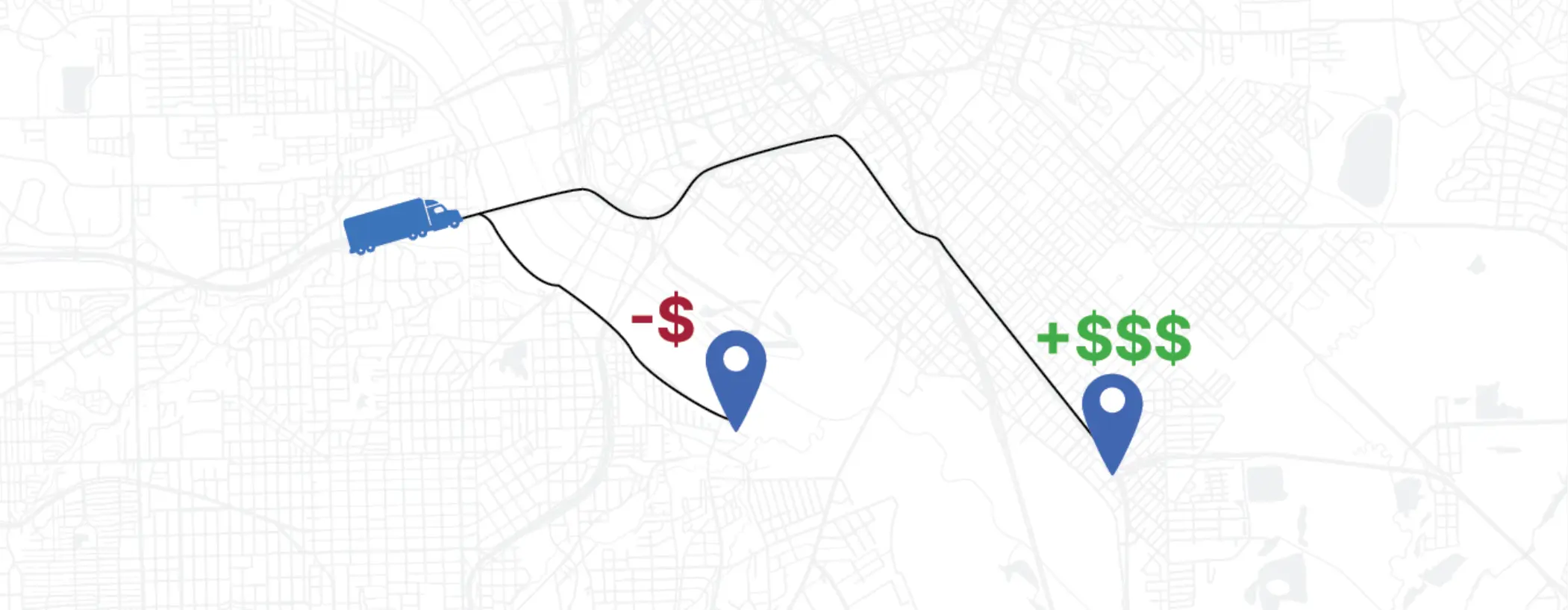

Quick answer: Lane Intelligence is a carrier feature within the LoadPay platform that estimates what a load may leave after fuel and operating costs, before you commit your truck. It's powered by Triumph Intelligence - a data engine that generates rate prediction analysis based on payments to more than 170,000 carriers through the Triumph Network1, giving carriers an alternative to legacy freight pricing tools based on posted loads. You get a estimated profit range, the assumptions behind that estimate, and a recommendation rating so you can compare opportunities and decide if a lane is worth taking, all before you book.
A posted rate tells you what a load pays. It doesn't tell you what you'll actually keep.
That gap is where a lot of carriers get burned. A rate looks solid on paper, but once you factor in fuel, deadhead miles, and the true cost of running your truck, the load barely breaks even. By the time you realize it, you've already committed the truck, and there's no going back.
Lane Intelligence helps close that gap. It's a LoadPay feature built to help owner-operators and small fleets estimate the likely outcome of a lane before booking it, not after—backed by the same data that powers confident spot transactions and pricing decisions across the freight market.
What Is Lane Intelligence?
Lane Intelligence estimates what a lane may leave after fuel and operating costs, before you commit the truck. It pulls together lane context, operating cost benchmarks from the American Transportation Research Institute (ATRI)2, and data from Triumph Intelligence to give you a clearer picture of the likely business outcome, not just the rate on the board.
Triumph Intelligence combines rate prediction with the veracity of the Triumph Network - designed to provide a transparent source of freight-rate insights. That means the estimates you see in Lane Intelligence aren't based on outdated benchmarks or legacy pricing tools. They're grounded in real market activity.
Instead of doing mental math or juggling a separate spreadsheet, you get a single view that turns a gross rate into an estimated profit, margin, and profit per mile.
Who Does Lane Intelligence Help?
Lane Intelligence is built for carriers who make the go or no-go call on every load themselves. That includes:
- Owner-operators running a single truck who need to protect thin margins on every mile.
- Fleets with three to six trucks, where one bad lane decision can throw off cash flow for the whole week.
- Fleets with seven to 20 trucks, where a dispatcher or back-office manager is comparing multiple lanes at once and needs consistent numbers to work from.
If you're the one deciding whether a lane is worth taking, this feature is built to better inform your decision.
What Problem Does Lane Intelligence Solve?
The core problem is simple: a rate alone can't tell you what you'll actually keep.
A posted rate can look attractive while hiding weak economics underneath. Fuel costs, operating expenses, equipment type, and deadhead miles all affect the real outcome, but those numbers are usually handled through mental math, gut instinct, or a separate tool that isn't connected to the booking decision.
Legacy freight pricing tools make this harder. They often rely on stale data or broad market averages that don't reflect what's actually happening on a specific lane. Triumph Intelligence addresses that directly - combining rate prediction with Triumph Network data to give you a transparent source of freight-rate estimates.
That creates three specific problems for carriers when they rely on rate alone:
- An attractive rate can hide thin economics. The decision often stops at the rate plus a gut check, without a clear view of the likely outcome.
- The truck gets committed too early. Once you've booked the load, you can't go back and choose differently.
- Every booking affects cash flow and capacity. The best time to get clarity is before the load is booked, not after.
Lane Intelligence moves the analysis to where it matters most: before you commit.
How Does Lane Intelligence Work?
Lane Intelligence is built around three core capabilities. Each one turns a gross rate into clearer decision context—driven by Triumph Intelligence data.
What Is the Likely Outcome Estimate?
Once you enter the origin, destination, and equipment type, Lane Intelligence uses Triumph Intelligence with ATRI to estimate the profit, margin, profit per mile, and a likely range for the lane. This is the first thing you see, and it's designed to answer the question you're really asking: what will this lane leave me after costs?
Because the estimate draws from Triumph Intelligence's rate prediction capabilities and Triumph Network data, it gives you a data-backed starting point beyond what you'd get from mental math or a legacy pricing tool.
What Are Visible Assumptions, and Why Do They Matter?
Before you trust any estimate, you should be able to see what's behind it. Lane Intelligence shows the benchmarks used in the calculation—sourced from Triumph Intelligence—and lets you edit your own truck inputs, such as fuel efficiency and operating costs. That way, the estimate reflects your operation, not a generic average.
This transparency is what sets it apart from legacy tools. You're not getting a black-box number. You're seeing the data, the assumptions, and how they apply to your specific situation.
What Is Decision Context?
If the first lane isn't compelling, Lane Intelligence explains why the lane received its rating and surfaces alternative opportunities and recent lane history. This gives you a way to compare options instead of guessing at what else is available—all grounded in the same Triumph Intelligence data powering the original estimate.
What Do the Recommendation Ratings Mean?
Every lane gets one of four recommendation cues:
- Average Estimated Profitability - Workable, but with less margin for error
- Above Average Estimated Profitability - strong estimated economics relative to the benchmarks and your inputs
- Below Average Estimated Profitability - The estimate suggests weaker economics, and comparable lanes may be worth reviewing.
These recommendation ratings are built on Triumph Intelligence data and are a starting point for your own judgment, not a replacement for it. They compare lane estimates against Triumph Intelligence benchmark data and are intended as informational decision support.
What Lane Intelligence Is Not
Lane Intelligence is an estimate, not a promise. It's built on Triumph Intelligence market and historical data, operating-cost benchmarks, and the assumptions you provide. Actual outcomes vary based on real-world conditions like traffic, fuel price changes, and unexpected delays.
Lane Intelligence does not guarantee profit, identify the single "best" lane, or make the booking decision for you. It gives you a clearer, more consistent way to pressure-test a lane so you can decide with more information than a rate alone provides.
How Do You Use Lane Intelligence Before Booking a Load?
Using Lane Intelligence fits naturally into the way you already evaluate loads:
- Enter the lane details. Add the origin, destination, and equipment type.
- Review the likely outcome. Look at the estimated profit, margin, profit per mile, and range - all powered by Triumph Intelligence.
- Check the assumptions. Confirm the benchmarks match your operation, and adjust your truck inputs if needed.
- Read the recommendation. Understand why the lane received its rating.
- Compare alternatives. If the lane isn't compelling, review other opportunities or recent lane history before you decide.
This sequence takes the guesswork out of a decision that used to rely on memory, experience, or a legacy pricing tool that wasn't built for this moment.
Know What You're Likely to Keep
A rate is just a starting point. What matters is what's left after fuel, operating costs, and the miles you actually run. Lane Intelligence gives owner-operators, micro fleets, and small fleets a clearer way to see that estimated outcome before the truck is committed, not after - powered by Triumph Intelligence's reliable, transparent rate data.
The goal isn't to make the decision for you. It's to make sure you're making it with real numbers in front of you.
Before you book your next load, take a minute to analyze the lane, review the assumptions, and see what you're likely to keep.
Frequently Asked Questions
What is Lane Intelligence in LoadPay?
Lane Intelligence is a carrier feature within the LoadPay platform that estimates a load's likely profit, margin, and profit per mile after fuel and operating costs. It's powered by Triumph Intelligence, which combines rate prediction capabilities with Triumph Network data to offer an alternative to legacy freight pricing tools.
What is Triumph Intelligence?
Triumph Intelligence is the data engine behind Lane Intelligence. It combines rate prediction capabilities with the veracity of the Triumph Network, giving carriers, brokers, and shippers a transparent alternative to legacy freight market pricing tools - enabling more confident spot transaction and pricing decisions.
Who should use Lane Intelligence?
Owner-operators, micro fleets with three to six trucks, and small fleets with seven to 20 trucks who make lane-by-lane booking decisions and want a consistent, data-backed way to estimate outcomes before committing a truck.
Is Lane Intelligence's profit estimate guaranteed?
No. Lane Intelligence provides an estimate built from Triumph Intelligence market and historical data, operating-cost benchmarks, and the assumptions you enter. Actual results vary based on real-world conditions.
How accurate is the Lane Intelligence estimate?
Accuracy depends on the truck inputs and assumptions you provide. Lane Intelligence draws from Triumph Intelligence data and shows those assumptions openly so you can adjust them to reflect your operation. The more closely your inputs match your real costs, the more useful the estimate.
Does Lane Intelligence replace my own judgment?
No. It gives you consistent, transparent decision context grounded in precise rate data. You still make the final call on whether a lane fits your operation.
1Triumph network data (65%, $88.5B, 170,000+) No public link. Internal data.
2ATRI, Operational Costs of Trucking, 2026 update ($2.34 a mile, margins under 1%)\ ATRI report page · ATRI press release, July 15, 2026.